Working at Heights in Ireland: The Complete Guide
Falls from height remain one of the leading causes of serious workplace injury in Ireland. This guide explains what counts as work at height, what the law expects, and the practical steps that keep every job above ground level safe.
What does "working at heights" actually mean?
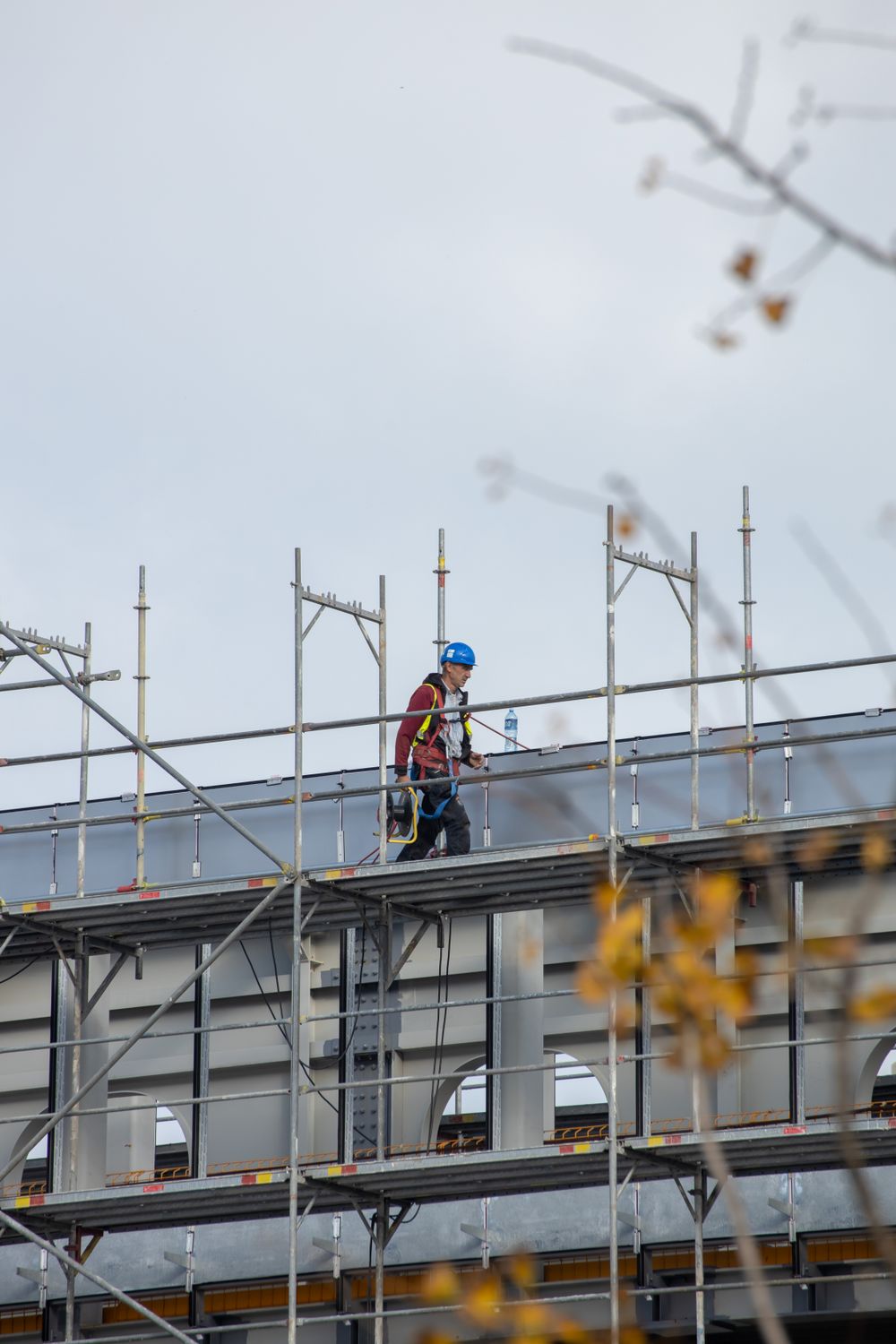
It is a common misconception that work at height only applies to scaffolds, roofs or tall structures. In Irish workplaces, work at height means any task carried out in a place where a person could fall a distance liable to cause personal injury — including falls from ground level into an opening, an excavation or a basement.
That definition is deliberately broad. Changing a light fitting from a stepladder, loading a delivery truck, cleaning gutters, stacking a mezzanine or working near a fragile rooflight all fall within scope. If a fall could hurt someone, the work is governed by the same legal duties and the same hierarchy of control.
The legal framework in Ireland
Two pieces of legislation underpin almost every height-related duty. The Safety, Health and Welfare at Work Act 2005sets the overarching obligation on employers to ensure, so far as is reasonably practicable, the safety of employees and others affected by the work. The detail then sits in the Safety, Health and Welfare at Work (General Application) Regulations 2007, with Part 4 dealing specifically with work at height.
Part 4 requires employers to plan work at height properly, to avoid it where possible, and where it cannot be avoided, to use suitable equipment and measures to prevent falls. The Health and Safety Authority (HSA) is the body that enforces these duties and publishes guidance for Irish employers and the self-employed.
If work at height cannot be avoided, the law requires you to assess the risk, select the right equipment for the task, and give priority to measures that protect everyone over measures that protect only one person.
Risk assessment comes first
Before anyone leaves the ground, the task must be assessed. A good work-at-height risk assessment looks at the height and duration of the work, the condition of the surface being worked on or from, the weather, the people involved and what they will be carrying.
- Can the work be avoided? Could it be done from the ground using extending tools, or designed out at the planning stage?
- Can a fall be prevented? Guard rails, working platforms, scaffolds and tower systems stop a fall before it starts.
- Can the consequences be reduced? Where a fall cannot be prevented, collective measures such as nets or soft-landing systems are preferred to personal fall-arrest harnesses.
Choosing the right access equipment
The equipment should match the task, not the other way around. Short, light, low-risk tasks may justify a ladder or stepladder. Longer or more demanding work usually needs a mobile tower, podium step, scaffold or powered access platform. Whatever you choose, it must be suitable, in good condition, set up by competent people and inspected before use. For more on the most common access tool, see our guide to ladder safety at work.
⭐ Key takeaways
- Work at height is any task where a fall could cause injury — not just roofs and scaffolds.
- The 2005 Act and Part 4 of the General Application Regulations 2007 set the legal duties, enforced by the HSA.
- Always avoid the work, then prevent the fall, then reduce the consequences — in that order.
- Equipment must be suitable, inspected and used only by trained, competent people.
Competence and training
Every person who works at height, supervises it or selects equipment must be competent. Competence is a mix of knowledge, training and experience. Training should cover the hazards, the hierarchy of control, safe use and inspection of equipment, and what to do in an emergency. Keeping records of who has been trained, and when refreshers are due, is part of demonstrating compliance if the HSA ever asks.
Working at Heights training from €35
Self-paced, HSA-aligned, certificate the same day — €35 per person.
Inspection, supervision and emergencies
Access equipment is only safe if it stays safe. Towers and scaffolds must be inspected after assembly and at suitable intervals, with the findings recorded. Ladders should be checked before every use. Supervision matters too: even competent workers benefit from someone confirming the set-up is right and the area below is protected.
Finally, plan for rescue. If you rely on a harness and a worker falls, suspension can become dangerous within minutes, so a workable rescue plan must be in place before the job begins — not improvised afterwards.
Putting it all together
Safe work at height is rarely about a single piece of kit. It is the result of good planning, honest risk assessment, the right equipment, competent people and clear supervision. For the detail behind the duties described here, read our breakdown of the work at height regulations in Ireland. Get those fundamentals right and the vast majority of falls simply never happen.