Abrasive Wheels Training in Ireland: A Complete Guide
Angle grinders, bench grinders and cut-off saws are everywhere on Irish sites — and the wheels they carry can shatter at thousands of revolutions per minute. This guide explains what abrasive wheels training covers and why it matters.
What is an abrasive wheel?
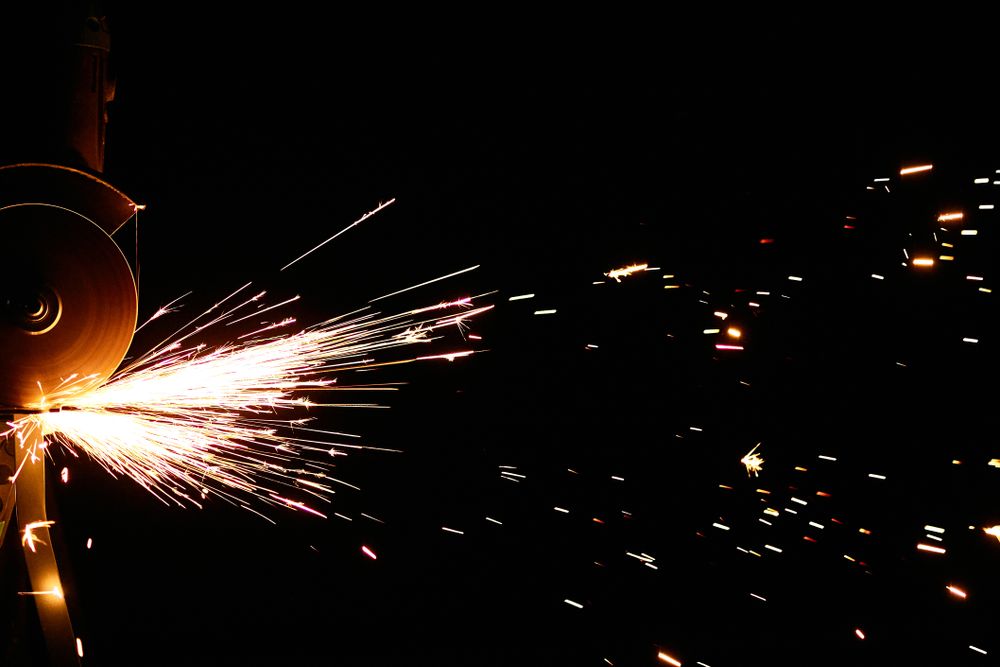
An abrasive wheel is a bonded grinding or cutting disc that removes material by friction as it spins at high speed. They are found on angle grinders, bench and pedestal grinders, cut-off saws and a range of portable and fixed tools. Because they turn so fast and carry so much stored energy, a damaged, wrongly fitted or wrongly chosen wheel can disintegrate without warning, throwing fragments at lethal speed.
That combination of everyday familiarity and serious hidden risk is exactly why training matters. Workers tend to treat grinders as routine, which is precisely when complacency creeps in.
Who needs abrasive wheels training?
Anyone who mounts, changes, dresses or operates an abrasive wheel as part of their work should be trained and competent to do so. This includes maintenance staff, fabricators, construction workers, mechanics and stonemasons. Under Irish law, employers must ensure that work equipment is used only by people who have received adequate information, instruction and training — and abrasive wheels are a classic example of equipment where that duty bites.
The person who changes the wheel carries the greatest responsibility: a mistake at the mounting stage can turn a routine cut into a burst disc and a serious injury.
What the training covers
A solid abrasive wheels course gives workers both the knowledge and the habits to work safely. Typical content includes:
- Hazards of abrasive wheels — bursting, contact, fragments, dust, noise and vibration.
- Wheel markings and selection — choosing the correct wheel for the material, machine and task.
- Inspection and the ring test for detecting cracks before fitting.
- Safe mounting and changing, including flanges, blotters and maximum operating speeds.
- Guarding and personal protective equipment, from eye protection to respiratory protection.
- Safe operation, storage and handling of wheels.
⭐ Key takeaways
- Abrasive wheels carry huge stored energy and can shatter if misused.
- Anyone who mounts, changes or operates a wheel must be trained and competent.
- Training covers selection, inspection, mounting, guarding, PPE and safe operation.
- Irish law requires work equipment to be used only by adequately trained people.
The legal backdrop
There is no standalone "abrasive wheels regulation" in Ireland today. Instead, the duties sit within the Safety, Health and Welfare at Work Act 2005 and the work-equipment provisions of the Safety, Health and Welfare at Work (General Application) Regulations 2007. Together they require employers to provide suitable equipment, maintain it, and ensure it is used only by trained, competent people. The Health and Safety Authority (HSA) enforces these duties. For the detail, see our guide to your legal duties on abrasive wheels in Ireland.
Abrasive Wheels training from €35
Self-paced, HSA-aligned, certificate the same day — €35 per person.
Online versus in-person
Much of abrasive wheels safety is knowledge-based: understanding wheel markings, recognising hazards, knowing the correct mounting sequence and choosing the right disc. This knowledge transfers well to a structured online course, which workers can complete at their own pace and revisit when needed. Where hands-on skill is required — for example, the first time someone changes a wheel — that can be reinforced under supervision on site, with the theory already firmly in place.
Understanding wheel markings
A surprising amount of abrasive wheel safety comes down to reading the wheel correctly before it is ever fitted. Every wheel carries information printed on its blotter or body: the type of wheel, the materials it is bonded from, its dimensions, and — most importantly — its maximum operating speed. A good course teaches workers to treat these markings as instructions rather than decoration. The maximum speed in particular is non-negotiable: a wheel must never be fitted to a machine that spins faster than the wheel is rated for, because exceeding that speed is one of the surest ways to cause a burst.
Workers also learn to match the wheel to the operation. A thin cutting disc is not a grinding disc; using the flat face of a disc designed only for cutting can weaken it and lead to failure. Recognising these distinctions on sight is exactly the kind of practical knowledge that separates a trained operator from someone working on guesswork.
The cost of getting it wrong
It is worth being blunt about why this training matters. A wheel turning at thousands of revolutions per minute stores enormous energy, and the operator is almost always the person standing closest to it. When a wheel bursts or a guard is missing, the consequences are immediate and severe. Training is inexpensive and quick; the injuries it prevents are neither. For employers, it is also a clear, documented way to show that the duty to provide adequate instruction has been met.
Keeping records and refreshing
Training is only useful if it sticks and if you can prove it happened. Keep a record of who has been trained, on which equipment, and when. Refresh that training periodically, especially if someone changes role, starts using a new type of wheel, or if an incident or near miss suggests habits have slipped. To put the knowledge into practice, read our step-by-step guide to mounting and changing an abrasive wheel safely.