Abrasive Wheel Accidents: Causes and Prevention
A burst wheel travelling at full speed, a grinder that kicks back into the operator, a lungful of silica dust — abrasive wheel injuries are serious, but they follow predictable patterns. Understand the causes and you can design out the risk.
Why these accidents are so serious
Abrasive wheels combine high rotational speed with brittle, bonded material. When something goes wrong, it tends to go wrong fast and with little warning. A fragment from a burst wheel can travel faster than a person can react, and the operator is usually the closest person to it. That is why abrasive wheel work is treated as higher-risk and why so much safety effort goes into preventing failures rather than reacting to them.
The most common causes
Most incidents trace back to a handful of root causes, nearly all of them preventable.
- Wheel bursting: caused by a cracked wheel, the wrong wheel for the speed of the machine, over-tightening, or damage from poor handling.
- Kickback: when the wheel snags or jams in the workpiece and the tool jerks violently towards the operator.
- Contact injuries: a moving wheel touching skin, often where the guard has been removed or wrongly adjusted.
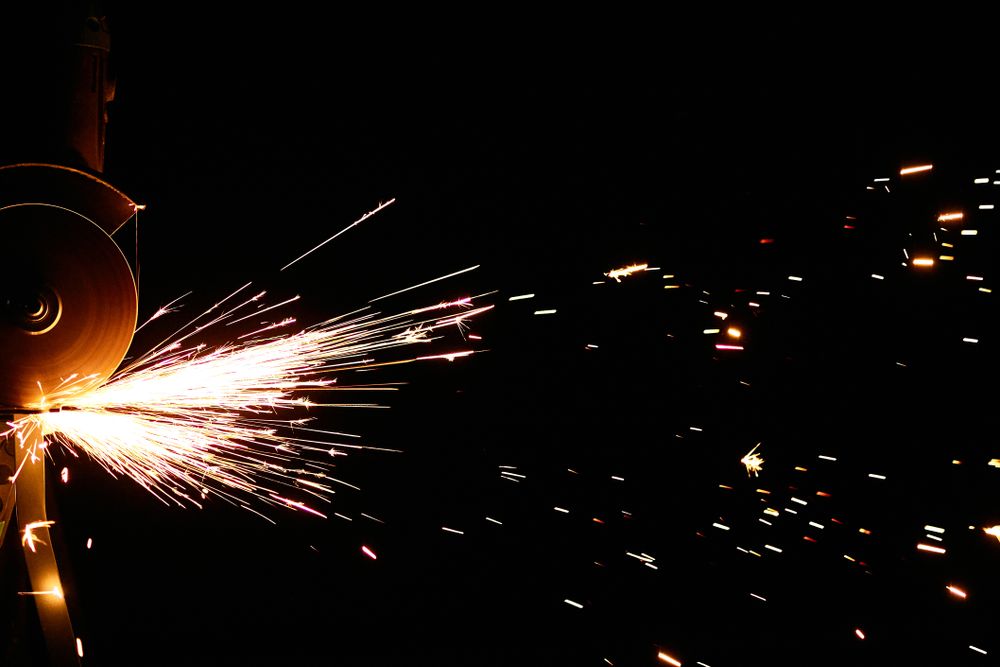
- Flying fragments and sparks: debris striking the eyes or face when eye protection is missing.
- Dust and noise: harmful dust such as silica, plus high noise and hand-arm vibration over time.
Almost every abrasive wheel accident can be traced to one of three things: the wrong wheel, a damaged wheel, or a missing guard. Address those and you remove most of the risk.
Preventing the burst
The most catastrophic failure is the wheel bursting, so prevention starts there. Use only wheels whose maximum operating speed meets or exceeds the machine's spindle speed. Inspect wheels before fitting, using the ring test where suitable, and reject any that sound dull. Mount wheels correctly with matched flanges and blotters, tightened firmly but not excessively. Store and handle wheels so they never get knocked or warped. Our step-by-step on mounting and changing an abrasive wheel safely walks through each of these checks.
⭐ Key takeaways
- Most abrasive wheel accidents stem from the wrong wheel, a damaged wheel, or a missing guard.
- Match wheel speed to the machine, inspect before fitting, and mount correctly.
- Never remove or wrongly set the wheel guard, and always wear eye protection.
- Control dust, noise and vibration as ongoing health risks, not just one-off hazards.
Preventing contact and kickback
Guarding is the operator's main physical protection, and it should cover as much of the wheel as the task allows. A guard that has been removed "just for this one job" is one of the most common findings after a contact injury. To reduce kickback, secure the workpiece, keep both hands on the tool, position your body out of the likely line of travel, and let the wheel do the work rather than forcing it. Never use the side of a disc designed only for edge cutting.
Abrasive Wheels training from €35
Self-paced, HSA-aligned, certificate the same day — €35 per person.
The slower-burning health risks
Not every abrasive wheel injury is sudden. Cutting and grinding generate dust that can include respirable crystalline silica when working stone, concrete or masonry — a recognised cause of serious lung disease over time. The same tools expose operators to high noise levels and to hand-arm vibration. These risks call for dust suppression or extraction, suitable respiratory protection, hearing protection and sensible limits on continuous use. They are easy to overlook precisely because the harm appears years later.
The right personal protective equipment
PPE is the last line of defence, not the first, but for abrasive wheel work it is essential. Eye and face protection guards against the constant stream of sparks and fragments. Where dust is generated, suitable respiratory protection protects the lungs, and hearing protection addresses the noise. Gloves, sensible clothing that cannot be caught by the wheel, and tied-back hair all reduce the chance of entanglement or contact. PPE works best alongside the more reliable controls — guarding, the right wheel and good maintenance — rather than as a substitute for them.
Learning from near misses
Many serious abrasive wheel accidents are preceded by near misses that went unreported: a wheel that chipped but did not burst, a tool that kicked back but was caught in time, a guard that was off when a supervisor walked past. Treating these as warnings rather than lucky escapes is one of the most effective ways to prevent the next, more serious event. A simple culture of reporting and reviewing near misses turns isolated close calls into shared lessons, and often reveals the same root causes — the wrong wheel, a damaged wheel, or a missing guard — before they cause real harm.
Training ties it all together
Every prevention measure above depends on the operator knowing what to do and why. Training turns a list of rules into instinct: the operator who has been trained checks the wheel speed, never runs without a guard, and keeps eye protection on without being told. It is also a legal expectation, as our guide to abrasive wheel legal duties in Ireland explains. Combine competent operators with the right equipment and good maintenance, and abrasive wheel accidents become rare events rather than waiting ones.